




Why You Should Carefully Read Your APR Disclosure
May 27, 2026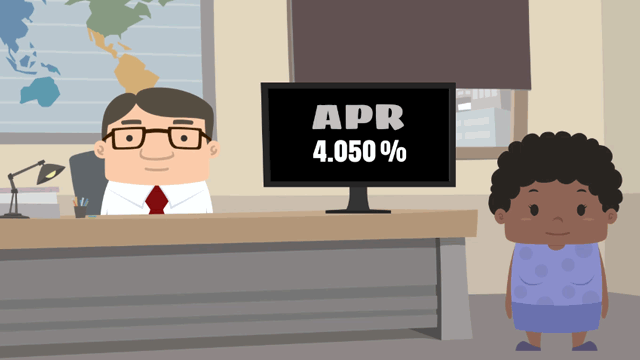
Knowing these expenses is easier thanks to a required APR disclosure that your lender must provide you with. The Annual Percentage Rate you get from the lender combines the baseline interest rate with the extra costs needed to secure the mortgage.
What goes into an APR
The APR disclosure should include details such as whether the mortgage has a fixed or adjustable interest rate. It delivers the total finance charge, which represents the total dollar amount the borrowing contract will cost over its full lifespan if all payments are made on schedule.
The documentation provides a detailed layout of the total number of scheduled installments, the precise dollar amount required for each billing cycle, and the exact calendar dates on which those balances are due. This schedule highlights shifts driven by adjustable-rate variables or changing mortgage insurance calculations.
What mandated an APR disclosure?
The Truth in Lending Act of 1968 created the legal framework for uniform credit cost reporting via an APR disclosure. This statute established the mathematical guidelines lenders must follow when showing financing terms to the public.
The Consumer Financial Protection Bureau directly oversees these transparency mandates. The agency regulates information disclosure to prevent lenders from hiding processing costs in complex contracts, ensuring buyers can make clear comparisons across different mortgage products.
Is mortgage insurance part of the APR?
The APR calculation includes the Upfront Mortgage Insurance Premium, which sits at 1.75 percent of the initial loan balance. This lump sum can be paid in cash at closing or rolled directly into the principal loan balance.
The calculation must include the monthly installments of the annual Mortgage Insurance Premium. This recurring charge remains mandatory for the entire mortgage term, pushing the final percentage above the standard interest rate.
How to review APRs
When comparing two competing offers with the exact same interest rate, the one with the lower annualized percentage is the cheaper choice. The gap between the two figures highlights which lender is charging fewer administrative fees and closing costs.
You should also get information about the mortgage contract. Does it include a balloon payment? A prepayment penalty? You should see neither of those two things on an APR disclorure for an FHA mortgage.
FHA Loan Articles
August 19, 2026Homebuyers who have enough cash for a down payment still need to consider their full financial picture before choosing between a conventional mortgage and an FHA loan. Having cash on hand changes the math for both options, but savings alone won't make a conventional loan the automatic winner. Credit scores, current debt, and the type of property you want to buy all determine which loan will cost less over time.
August 11, 2026Homeowners with FHA adjustable-rate loans need to track their loans more closely. That is because FHA ARM loans start with introductory interest rates that eventually expire and are subject to change afterwards based on market rates. When interest rates rise, monthly housing payments climb on ARM loans, pushing many homeowners to consider refinancing into a fixed-rate mortgage.
August 10, 2026If you want to buy a home with an FHA mortgage, you must set up an escrow account to cover property taxes, homeowner insurance, and upfront closing expenses. While the FHA loan program has rules for funding these accounts, buyers often do not realize those rules can include approved and unallowed sources for escrow funds. What do you need to know before you set up and fund your escrow account for an FHA mortgage?
August 3, 2026Buying a home in a high-cost area requires understanding how FHA loan limits shape your financing options. Does the house for sale have a price above the local FHA loan limit? You may need to explore your jumbo loan options. There are conventional jumbo loans and FHA versions. Which is right for you? Much depends on your financial needs, plans, and goals for the loan.
July 30, 2026There is a common misconception about FHA loans that only a first-time home buyer can use the program. This is not true; repeat buyers can qualify for an FHA loan, but why does this misconception exist? Partially because state and local programs have first-time buyer requirements for down payment and/or closing cost assistance programs. So while you do not need to be a first-time buyer to get an FHA loan, you may need to meet that definition to qualify for down payment help.