





One-Time Close Construction Mortgages vs. Two-Close Loans
May 20, 2023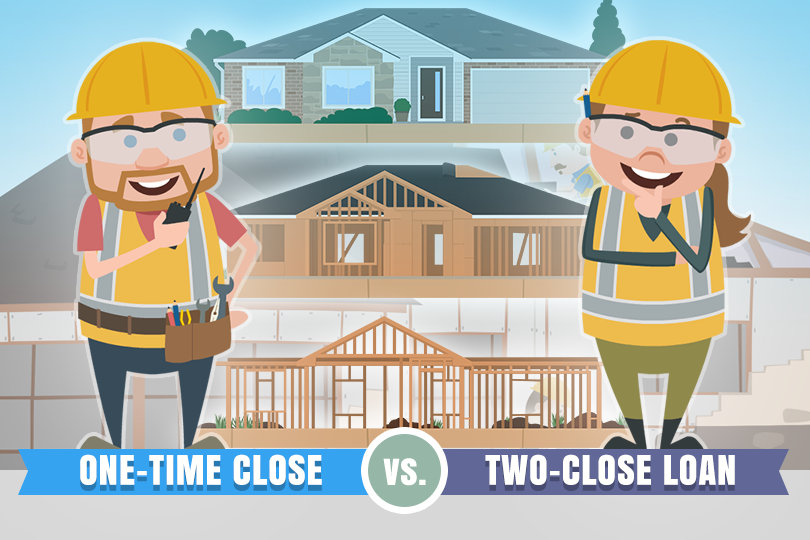
The FHA One-Time Close loan is the mortgage you want to build a home from the ground up instead of buying someone else’s dream home.
But you will want to address some issues comparing construction loan options. It’s true that some lenders still offer the riskier two-close construction loan with two applications, two closing dates, and two different interest rates for the two loans.
Why go with a single close construction loan? The most obvious answer is that getting through the approval process for a single mortgage is a lot better for most applicants.
But that aside, FHA One-Time Close construction loans feature a single interest rate, and that rate is typically offered for a 30-year, fixed-interest mortgage. It is not a variable or adjustable interest rate loan.
A single-close or One-Time Close loan process has the interest rate is set before construction and the permanent loan interest rate is also pre-determined for a surprise-free experience. Compare that to the experience a borrower may have during the more complicated two-close construction loan.
In those cases, a loan for the construction phase of the process may be offered strictly as an adjustable-rate loan. A fixed interest rate is offered for the permanent loan (the second one), which is the mortgage.
Application time is tricky for two-close loans. You get no guarantees that you definitely will qualify both times for the two loans. What could go wrong between the first and second applications?
Consider the borrower who has credit problems after the construction loan is approved. If they get the construction loan but not the permanent loan, there are obvious problems that happen as a result. The danger of being approved once, but not twice is enough to make some reconsider a two-close construction loan even if they are offered more competitive interest rates than a One-Time Close mortgage.
There are ways to manage the higher interest payments. one way is to divide your monthly payment in half and pay the same mortgage amount, but in two installments each month.
Paying this way means you will make an extra mortgage payment each year without having spent any extra money, and that can go a long way toward helping you save money over the full term of the mortgage.
------------------------------
RELATED VIDEOS:
What You Need to Know About the Appraisal Fee
The Appraisal is an Important Requirement
Build Your Dream Home With a One-Time Close Loan
FHA Loan Articles
July 30, 2026There is a common misconception about FHA loans that only a first-time home buyer can use the program. This is not true; repeat buyers can qualify for an FHA loan, but why does this misconception exist? Partially because state and local programs have first-time buyer requirements for down payment and/or closing cost assistance programs. So while you do not need to be a first-time buyer to get an FHA loan, you may need to meet that definition to qualify for down payment help.
July 29, 2026When you buy a home with an FHA mortgage, you have an option to apply for a cash-out refinance to take equity in your home out in cash. These loans are offered to those with 80% equity in the home or better, and you can apply for this type of cash-out refinancing once you hit that 80% mark. Many choose to wait until their equity is much higher to achieve the best results, and it pays to factor in your closing expenses and lender fees when running the numbers to assess how affordable this option is given your budget and financial goals.
July 28, 2026FHA loan rules require escrow, and the funds used to fund escrow must come from approved sources. FHA loan rules require the lender to verify funds for earnest money or closing costs and will not allow sources such as payday loans, credit card cash advances, or non-collateralized loans. If you have never opened an escrow account before, there are some important details to know before you start.
July 20, 2026Escrow accounts play a central role in managing property taxes and insurance for FHA mortgages. Understanding escrow accounts is an important part of being a new home owner, especially if you have plans to refinance the property at some point and want to know your options to get out of escrow. We examine some key points here about revising and canceling escrow on an FHA mortgage.
July 18, 2026Many home purchasers hold incorrect assumptions about FHA mortgage rules and restrictions. These loans are not limited to first-time buyers, for example, and there is no age limit for FHA loans. FHA borrowers may apply for more than one FHA mortgage, but these loans are for owner-occupied residences only. We examine some important points on these issues, including when you can and cannot have more than one FHA loan at a time.