





For College Grads Thinking About Buying A Home
January 29, 2025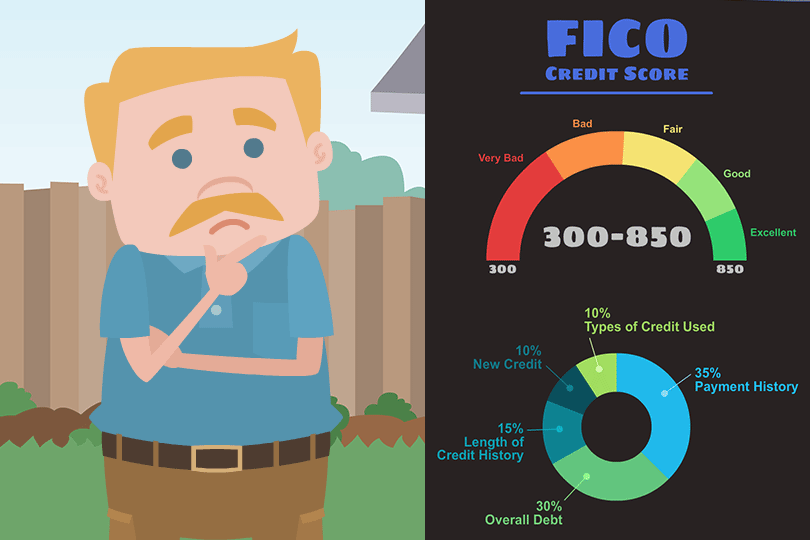
Two key terms you'll encounter early on are "FICO score" and "credit history." How do these two things affect your ability to buy a home?
Your FICO score is like your GPA – a quick indicator of your academic performance. On the other hand, your credit history is like your transcript – a detailed record of your courses and grades. Both are important.
FICO Scores: Your Financial GPA
Your FICO score is a three-digit number that summarizes your credit risk. It's calculated using a complex algorithm that considers various factors, including:
Payment History: Just like attending class, paying your bills on time is crucial. This is the most critical factor in your FICO score.
- Amounts Owed: Think of this as your current course load. Carrying too much debt (like taking too many challenging courses) can negatively impact your score.
- Length of Credit History: Similar to your academic career, a longer credit history generally demonstrates more experience and responsibility.
- New Credit: Opening multiple new accounts in a short period can raise red flags, just like suddenly changing your significant multiple times might concern an admissions officer.
- Credit Mix: Having multiple credit types (credit cards, loans, etc.) shows you can handle different financial responsibilities, much like taking a diverse range of courses, which demonstrates a well-rounded education.
Your credit history provides a record of your borrowing and repayment activities. It's a bit like a transcript, showing the lender a lot.
- Credit Accounts: Like a course on your transcript, each account tells a story about your financial behavior.
- Payment History: Late payments can hurt your overall financial picture.
- Credit Limits and Balances: These show how much "credit" you've been given and how you manage it.
- Public Records: Bankruptcies, liens, and judgments are like academic probation. They can be major obstacles to overcome.
Lenders use your FICO score as an initial screening tool. It gives them a quick snapshot of your creditworthiness. However, they delve deeper into your credit history to get the full picture.
Think of it like this: a high GPA might get you noticed, but a strong transcript with consistent performance and a challenging course load will ultimately secure your admission.
A good FICO score might get your foot in the door, but a positive credit history with responsible financial behavior will ultimately convince the lender to approve your loan.
Beyond the Numbers: The Importance of Financial Responsibility
While FICO scores and credit history are essential, lenders consider other factors, such as employment history, debt-to-income ratio, and other variables.
These extracurricular activities and letters of recommendation provide a more holistic view of your capabilities. Building a strong credit profile is ultimately about demonstrating financial responsibility to your lender. You need to show a record of being a good credit risk.
Like your academic performance, your creditworthiness reflects your commitment to meeting your obligations and managing your resources effectively.
FHA Loan Articles
August 19, 2026Homebuyers who have enough cash for a down payment still need to consider their full financial picture before choosing between a conventional mortgage and an FHA loan. Having cash on hand changes the math for both options, but savings alone won't make a conventional loan the automatic winner. Credit scores, current debt, and the type of property you want to buy all determine which loan will cost less over time.
August 11, 2026Homeowners with FHA adjustable-rate loans need to track their loans more closely. That is because FHA ARM loans start with introductory interest rates that eventually expire and are subject to change afterwards based on market rates. When interest rates rise, monthly housing payments climb on ARM loans, pushing many homeowners to consider refinancing into a fixed-rate mortgage.
August 10, 2026If you want to buy a home with an FHA mortgage, you must set up an escrow account to cover property taxes, homeowner insurance, and upfront closing expenses. While the FHA loan program has rules for funding these accounts, buyers often do not realize those rules can include approved and unallowed sources for escrow funds. What do you need to know before you set up and fund your escrow account for an FHA mortgage?
August 3, 2026Buying a home in a high-cost area requires understanding how FHA loan limits shape your financing options. Does the house for sale have a price above the local FHA loan limit? You may need to explore your jumbo loan options. There are conventional jumbo loans and FHA versions. Which is right for you? Much depends on your financial needs, plans, and goals for the loan.
July 30, 2026There is a common misconception about FHA loans that only a first-time home buyer can use the program. This is not true; repeat buyers can qualify for an FHA loan, but why does this misconception exist? Partially because state and local programs have first-time buyer requirements for down payment and/or closing cost assistance programs. So while you do not need to be a first-time buyer to get an FHA loan, you may need to meet that definition to qualify for down payment help.