





Credit Basics For FHA Home Loan Approval
September 23, 2025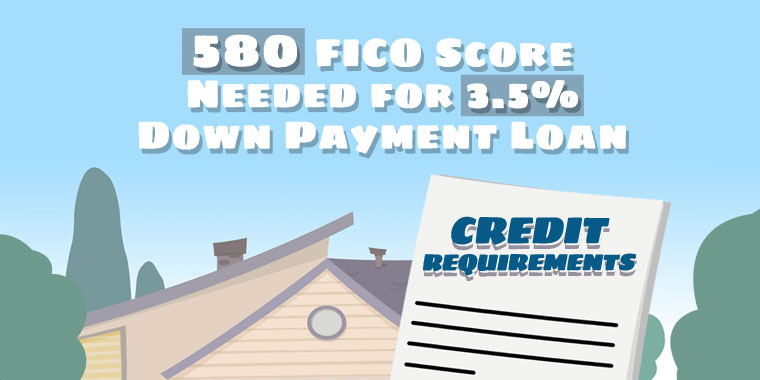
FHA sets the minimum guidelines, but individual lenders have their own rules that also must be considered.
The following questions and answers break down these requirements. We cover the FHA's official credit score tiers, the impact of lender-specific rules, and how major events like bankruptcy or foreclosure are treated.
What is the minimum credit score for an FHA loan?
The FHA has two main credit score tiers. A score of 580 or higher qualifies you for the minimum 3.5 percent down payment. If your score is between 500 and 579, you may still qualify but will be required to make a larger down payment of at least 10 percent. Scores below 500 are generally not eligible.
Why did a lender tell me I need a 620 score if the FHA minimum is 580?
This is due to "lender overlays." Lenders can impose their own requirements on top of the FHA's minimums to reduce their risk. Because these overlays vary, it is a good idea to apply with more than one lender.
Can I get an FHA loan if I don't have a credit score?
If you do not have a traditional credit history, the FHA allows lenders to perform "manual underwriting." This involves evaluating your financial history using other sources.
What is non-traditional credit?
Non-traditional credit is a history of on-time payments for recurring bills. For an FHA loan, lenders can consider a 12-month history of payments for things like rent, utilities (gas, electric), insurance premiums, and phone bills to establish your creditworthiness.
How long do I have to wait after a bankruptcy?
For a Chapter 7 bankruptcy, there is typically a two-year waiting period from the discharge date. For a Chapter 13 bankruptcy, you may qualify after making 12 months of on-time payments with the court's permission.
Is there a waiting period after a foreclosure?
Yes, there is generally a three-year waiting period from the date the property deed was transferred out of your name.
Are there exceptions to these waiting periods?
Shorter waiting periods may be possible if you can prove the bankruptcy or foreclosure was caused by an extenuating circumstance beyond your control, such as a serious illness. You must also show that you have re-established good credit.
How important is my recent credit history?
It is extremely important. Lenders focus heavily on your credit behavior in the last 12 to 24 months. A recent history of on-time payments and financial stability is a critical factor for approval.
How do student loans affect my FHA application?
Lenders must include a monthly student loan payment in your debt-to-income ratio. Even if your loans are in deferment or forbearance, the lender will typically use 0.5 percent of the outstanding loan balance as your monthly payment for qualification purposes.
Do collections on my credit report need to be paid off?
It depends. FHA guidelines do not require medical collection accounts to be paid off. For non-medical collections totaling over $2,000, the lender may require you to either pay them off or set up a payment plan, and that monthly payment will be included in your debts.
Does my spouse's bad credit affect my application?
If you are the only applicant for the loan, your non-borrowing spouse's credit score is not considered for qualification purposes. However, if you live in a community property state, your spouse's debts will generally be included in your debt-to-income calculation, even if they are not on the loan.
What should I avoid doing right before applying for a loan?
In the months leading up to your application, you should avoid several actions. Do not open new credit cards or take out new loans. Do not make large, undocumented cash deposits into your bank accounts. Do not change jobs, and refrain from co-signing a loan for anyone else. Any of these actions can complicate or delay your loan approval.
FHA Loan Articles
August 19, 2026Homebuyers who have enough cash for a down payment still need to consider their full financial picture before choosing between a conventional mortgage and an FHA loan. Having cash on hand changes the math for both options, but savings alone won't make a conventional loan the automatic winner. Credit scores, current debt, and the type of property you want to buy all determine which loan will cost less over time.
August 11, 2026Homeowners with FHA adjustable-rate loans need to track their loans more closely. That is because FHA ARM loans start with introductory interest rates that eventually expire and are subject to change afterwards based on market rates. When interest rates rise, monthly housing payments climb on ARM loans, pushing many homeowners to consider refinancing into a fixed-rate mortgage.
August 10, 2026If you want to buy a home with an FHA mortgage, you must set up an escrow account to cover property taxes, homeowner insurance, and upfront closing expenses. While the FHA loan program has rules for funding these accounts, buyers often do not realize those rules can include approved and unallowed sources for escrow funds. What do you need to know before you set up and fund your escrow account for an FHA mortgage?
August 3, 2026Buying a home in a high-cost area requires understanding how FHA loan limits shape your financing options. Does the house for sale have a price above the local FHA loan limit? You may need to explore your jumbo loan options. There are conventional jumbo loans and FHA versions. Which is right for you? Much depends on your financial needs, plans, and goals for the loan.
July 30, 2026There is a common misconception about FHA loans that only a first-time home buyer can use the program. This is not true; repeat buyers can qualify for an FHA loan, but why does this misconception exist? Partially because state and local programs have first-time buyer requirements for down payment and/or closing cost assistance programs. So while you do not need to be a first-time buyer to get an FHA loan, you may need to meet that definition to qualify for down payment help.