




FHA Loan Closing Day
November 12, 2025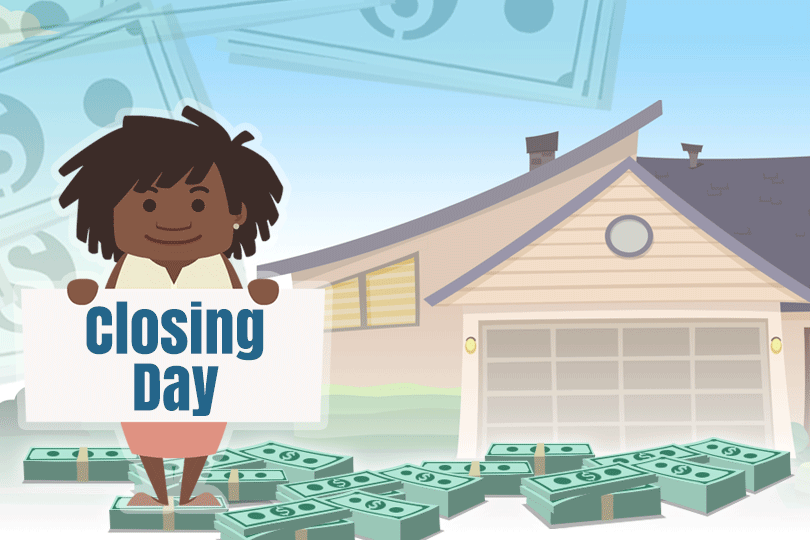
At this meeting, the buyer signs all the final loan documents, pays their "cash to close" (which includes the down payment and other costs), and the lender funds are disbursed to the seller.
For an FHA borrower, closing also means finalizing the FHA-insured mortgage, accounting for the Up-Front Mortgage Insurance Premium (UFMIP), and confirming the home has met the Department of Housing and Urban Development's (HUD) property standards.
What is a closing day?
Closing day is the final meeting where ownership of a home is transferred to the buyer. All final documents are signed, the buyer pays all remaining costs, and the lender's loan money is distributed.
What is the Closing Disclosure (CD)?
The Closing Disclosure is a critical document that itemizes all final figures, debits, and credits for the loan. Federal law requires the lender to provide this document to the buyer at least three business days before closing.
What must happen before the closing day?
The lender must issue a "Clear to Close" (CTC), which is the final underwriting approval. For an FHA loan, this also confirms the property has met HUD's Minimum Property Standards, including any required repairs found during the FHA appraisal.
Why is there a three-day review period for the CD?
This mandatory period allows the buyer to compare the final terms and costs with the original Loan Estimate received when they first applied for the loan.
What is the "cash to close"?
This is the total amount of money the buyer must pay at closing. It includes the down payment and all other closing costs, minus any earnest money already paid.
How must I pay the "cash to close"?
You must use a cashier's check or a wire transfer. Personal checks are not accepted for this payment.
What are the most important documents I will sign?
You will sign many legal forms. The two most important are the Promissory Note (your legal promise to repay the loan) and the Deed of Trust (the document that pledges the home as collateral for the loan).
What happens to the FHA Up-Front Mortgage Insurance Premium (UFMIP) at closing?
The UFMIP is finalized at closing. This cost is usually financed by adding it to the total loan balance, which will be itemized on the Closing Disclosure.
What is an escrow account for?
At closing, you will make your first deposit into an escrow account. The lender will use this account to pay your future property taxes, homeowners insurance, and the ongoing FHA monthly mortgage insurance (MIP) on your behalf.
Who attends the closing meeting?
The buyer, the seller, and the closing agent (a neutral third party from the title or escrow company) are usually present. Real estate agents may also attend.
What is the final walk-through?
This is an inspection conducted by the buyer, ideally 24 hours before closing. Its purpose is to ensure the property is in the same condition as when the offer was made and that all agreed-upon repairs are complete.
When does the home officially become mine?
Immediately after the meeting, the closing agent records the new deed with the county. This action makes the transfer of ownership a public record. Once this recording is confirmed, you legally own the home and will receive the keys.
FHA Loan Articles
August 19, 2026Homebuyers who have enough cash for a down payment still need to consider their full financial picture before choosing between a conventional mortgage and an FHA loan. Having cash on hand changes the math for both options, but savings alone won't make a conventional loan the automatic winner. Credit scores, current debt, and the type of property you want to buy all determine which loan will cost less over time.
August 11, 2026Homeowners with FHA adjustable-rate loans need to track their loans more closely. That is because FHA ARM loans start with introductory interest rates that eventually expire and are subject to change afterwards based on market rates. When interest rates rise, monthly housing payments climb on ARM loans, pushing many homeowners to consider refinancing into a fixed-rate mortgage.
August 10, 2026If you want to buy a home with an FHA mortgage, you must set up an escrow account to cover property taxes, homeowner insurance, and upfront closing expenses. While the FHA loan program has rules for funding these accounts, buyers often do not realize those rules can include approved and unallowed sources for escrow funds. What do you need to know before you set up and fund your escrow account for an FHA mortgage?
August 3, 2026Buying a home in a high-cost area requires understanding how FHA loan limits shape your financing options. Does the house for sale have a price above the local FHA loan limit? You may need to explore your jumbo loan options. There are conventional jumbo loans and FHA versions. Which is right for you? Much depends on your financial needs, plans, and goals for the loan.
July 30, 2026There is a common misconception about FHA loans that only a first-time home buyer can use the program. This is not true; repeat buyers can qualify for an FHA loan, but why does this misconception exist? Partially because state and local programs have first-time buyer requirements for down payment and/or closing cost assistance programs. So while you do not need to be a first-time buyer to get an FHA loan, you may need to meet that definition to qualify for down payment help.