





What to Know About Credit Reports
December 16, 2025
There are three major credit bureaus.
- Equifax
- Experian
- TransUnion
The process begins with banks, credit card issuers, mortgage lenders, and auto loan providers you do business with. Every month, these companies send electronic updates to the bureaus regarding your current balances, credit limits, and payment status.
Your Data
How do the bureaus ensure the data is attached to the right person? They rely on identifiers such as your Social Security number, name, and address history to build a unique file.
Is every lender required to report my financial activity? No. It is important to note that this reporting is entirely voluntary. The law does not require lenders to report to all three bureaus, or even any at all.
Because of this, your file at Experian might contain slightly different information than your file at TransUnion. This is why financial experts recommend monitoring all three versions of your history.
Types of Personal Data in Your Credit Reports
The first section is the Personal Identifying Information. It includes your full legal name, any known aliases or maiden names, your current and previous residential addresses, and your Social Security number.
While this information does not impact your creditworthiness, it is still vital to review. Errors here can be an early warning sign of identity theft or of mixed files, where your data is accidentally merged with someone with a similar name.
Account history, often called trade lines, provides a granular look at every credit account you have opened.
This ranges from retail store cards to thirty-year mortgages. For each account, the report displays the date it was opened, the type of credit (revolving credit for cards or installment credit for fixed loans), and the account's current status.
Even a single payment that is thirty days late can be flagged and remain on the report for seven years. This can significantly hurt your perceived financial reliability.
How Long Bankruptcies Remain on a Credit Report
While tax liens and civil judgments were for the most part removed from reports in recent years due to policy changes, bankruptcies remain a major factor.
A Chapter 7 bankruptcy may remain on a credit report for ten years, while a Chapter 13 filing typically stays for seven years.
If a debt goes unpaid long enough that a creditor sells it to a third-party agency, a collection account will appear. This signals to future lenders that a previous obligation was not met.
Hard Credit Inquiries vs. Soft Credit Inquiries
Inquiries are records of who sought access to your credit reports. They are split into two categories. Hard inquiries occur when you actively apply for credit, and that activity is visible to lenders, causing a minor, temporary dip in your credit score.
Soft inquiries happen typically during background checks or when you check your own score. They typically have little to no impact on your credit standing.
The Bottom Line
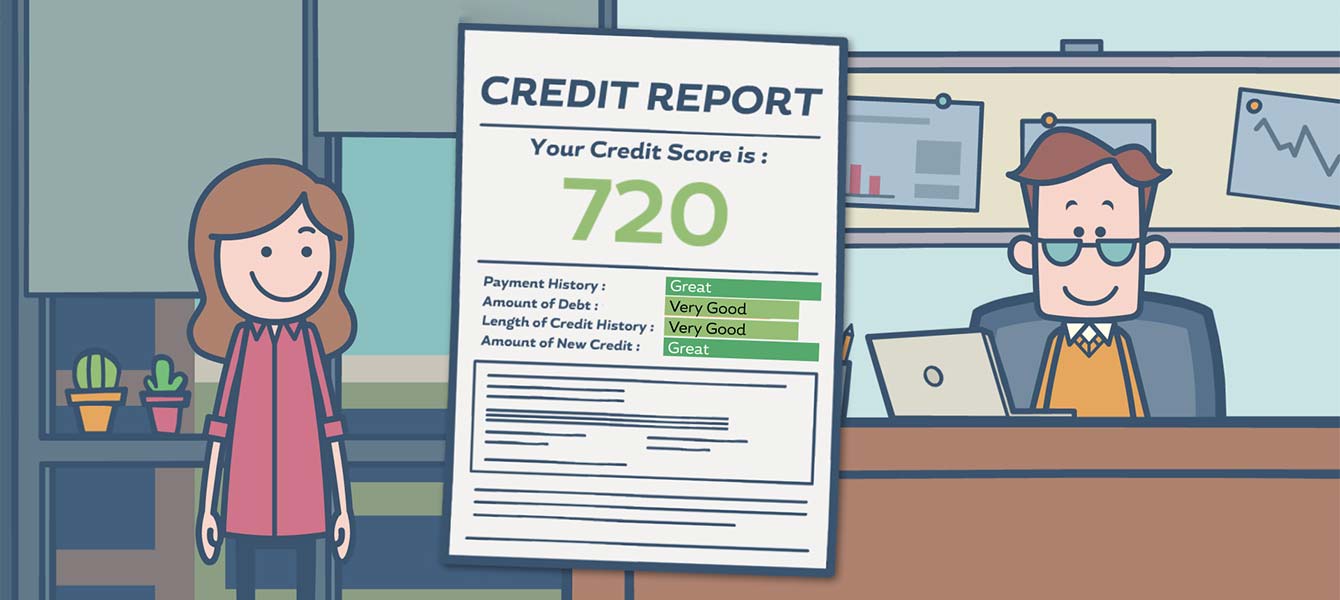
Ultimately, the credit report serves as the foundation for your financial reputation. It is important to respect that foundation and review your information at least a year in advance of any large credit application like an FHA mortgage.
FHA Loan Articles
August 19, 2026Homebuyers who have enough cash for a down payment still need to consider their full financial picture before choosing between a conventional mortgage and an FHA loan. Having cash on hand changes the math for both options, but savings alone won't make a conventional loan the automatic winner. Credit scores, current debt, and the type of property you want to buy all determine which loan will cost less over time.
August 11, 2026Homeowners with FHA adjustable-rate loans need to track their loans more closely. That is because FHA ARM loans start with introductory interest rates that eventually expire and are subject to change afterwards based on market rates. When interest rates rise, monthly housing payments climb on ARM loans, pushing many homeowners to consider refinancing into a fixed-rate mortgage.
August 10, 2026If you want to buy a home with an FHA mortgage, you must set up an escrow account to cover property taxes, homeowner insurance, and upfront closing expenses. While the FHA loan program has rules for funding these accounts, buyers often do not realize those rules can include approved and unallowed sources for escrow funds. What do you need to know before you set up and fund your escrow account for an FHA mortgage?
August 3, 2026Buying a home in a high-cost area requires understanding how FHA loan limits shape your financing options. Does the house for sale have a price above the local FHA loan limit? You may need to explore your jumbo loan options. There are conventional jumbo loans and FHA versions. Which is right for you? Much depends on your financial needs, plans, and goals for the loan.
July 30, 2026There is a common misconception about FHA loans that only a first-time home buyer can use the program. This is not true; repeat buyers can qualify for an FHA loan, but why does this misconception exist? Partially because state and local programs have first-time buyer requirements for down payment and/or closing cost assistance programs. So while you do not need to be a first-time buyer to get an FHA loan, you may need to meet that definition to qualify for down payment help.